
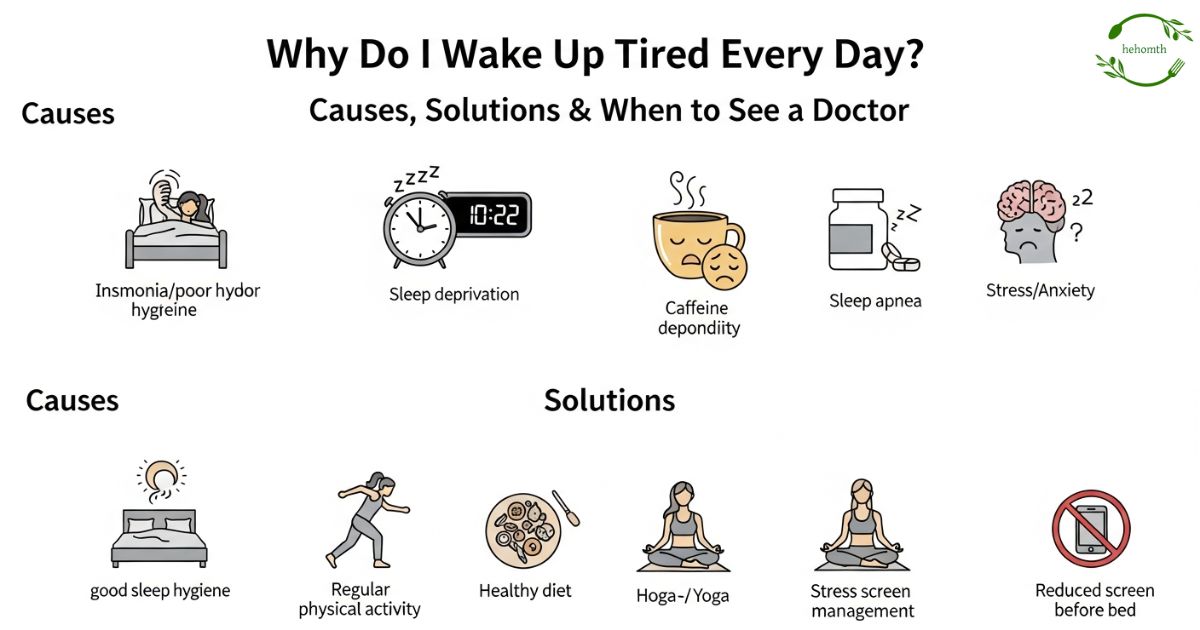
You slept a full night. Your alarm rang. And somehow you still feel like you never closed your eyes. If you wake up tired every single morning, you’re far from alone. Millions of Americans crawl out of bed each day feeling drained, foggy, and completely unrefreshed even after 7 to 9 hours of sleep. The problem isn’t always how long you sleep.
Sometimes your sleep quality is silently broken. A secret sleep disorder, bad habits, or a thyroid issue lurking undiagnosed could be the culprits behind your restless nights. Pinpointing the underlying reasons for your fatigue is essential if you ever want to feel like yourself again when you wake up.
1. Common Reasons You Wake Up Tired Every Day
It’s not always about the sheer number of hours you manage to spend in bed.
Sleep quality matters far more than sleep quantity. You could log a full eight hours and still feel wrecked if your body never reaches deep, restorative sleep. Poor sleep hygiene, inconsistent bedtimes, and late-night habits all chip away at the quality of your rest without you even realizing it. Your circadian rhythm your body’s internal 24-hour clock depends on routine. Disrupt it enough and your mornings pay the price.
Think about your average evening. Are you eating late, staying up past midnight, or jumping into bed still mentally wired from work? These habits quietly sabotage your sleep cycle night after night. If you’re scrolling through your phone until your eyes close, your brain never truly winds down. The causes of fatigue in the morning often trace back to the hours before you even hit the pillow. Small daily choices stack up and eventually, your body stops recovering the way it should.
What Does Normal Morning Tiredness Feel Like vs. a Real Problem?
Feeling a little groggy right after waking is completely normal. It’s called sleep inertia and it usually lifts within 15 to 30 minutes. But if you’re always tired well into the afternoon despite a full night’s rest, that’s a different story. Chronic morning exhaustion that doesn’t respond to more sleep or rest is a signal worth taking seriously. Here’s how to tell the difference:
| Normal Tiredness | Chronic Fatigue Signal |
| Clears up after coffee or breakfast | Persists throughout the entire day |
| Happens after a genuinely late night | Happens even after 8+ hours of sleep |
| Improves with one good night of rest | Doesn’t improve no matter how much you sleep |
| Occurs occasionally | Occurs daily or near-daily |
| No impact on mood or focus | Causes brain fog, irritability, and poor concentration |
2. Could You Have an Undiagnosed Sleep Disorder?
Here’s a startling fact the National Sleep Foundation estimates that up to 29 million Americans have sleep apnea and most of them have no idea. Sleep apnea causes your breathing to stop and restart repeatedly during the night. Every time that happens, your brain briefly wakes up to restart the process. You may not remember these micro-awakenings but your body absolutely feels them. The result is fragmented sleep that leaves you waking up exhausted no matter how early you went to bed. Other sleep disorders like restless leg syndrome, insomnia, and hypersomnia can have a similarly devastating effect on your mornings.
The tricky part is that many of these conditions go undiagnosed for years. People just assume they’re naturally bad sleepers and push through with more caffeine. But if you snore loudly, wake up with headaches, or feel foggy every single morning, a sleep evaluation could change your life. A CPAP machine is one of the most effective treatments for sleep apnea and most people who use it report dramatic improvements in energy within just a few weeks. Don’t guess. A proper diagnosis is always the smarter move.

Signs You Might Have an Undiagnosed Sleep Disorder
A sleep disorder rarely announces itself clearly. Most people just feel off tired, foggy, irritable without connecting it to what’s happening during their sleep. Watch for these warning signs that
suggest something deeper might be going on with your sleep quality:
1. Loud snoring or gasping sounds during sleep, frequently noted by a bedmate.
2. Waking up with a dry mouth or a morning headache, a recurring experience.
3. Feeling utterly drained, despite spending eight or nine hours in bed.
4. Unplanned daytime sleepiness at work, in front of the television, or even while behind the wheel.
5. Significant mood swings, irritability, or trouble focusing, with no obvious cause.
6. Restless or uncomfortable legs at night, making it difficult to remain still.
Underlying Medical Conditions That Cause Morning Fatigue

Your exhaustion might be your body sending a quiet but urgent SOS. Several medical conditions directly interfere with energy production and sleep quality and most of them are completely treatable once identified. Hypothyroidism, for example, slows down nearly every process in your body. When your thyroid gland underperforms, your metabolism crawls, your muscles feel weak and your mornings feel impossible. Iron deficiency is another common culprit, especially among American women. Without enough iron, your blood can’t carry oxygen efficiently and every cell in your body suffers for it. A urinary tract infection can also cause persistent fatigue, even when the classic burning symptoms are mild or absent. Fighting any undiagnosed infection drains your immune system and your energy reserves simultaneously.
The good news? Most of these conditions show up on a standard blood test. A simple panel checking your thyroid levels, iron, vitamin D deficiency markers, and blood glucose can reveal what’s stealing your energy. According to experts at Henry Ford Health, nutrient deficiency is one of the most overlooked causes of fatigue in otherwise healthy adults. Many patients are shocked to learn that a low vitamin D level or sluggish thyroid not stress or lifestyle is the real reason they’ve felt exhausted for months. Knowing is the first step. Treating it is where the transformation begins.
Medical Conditions Commonly Linked to Morning Exhaustion
If waking up exhausted is your daily reality, ask your doctor to run a full panel. Here are the most common conditions to screen for and the tests that catch them:
| Condition | Primary Symptom | Recommended Test |
| Hypothyroidism | Sluggishness, cold sensitivity, weight gain | Blood test — TSH levels |
| Iron Deficiency Anemia | Pale skin, breathlessness, brain fog | Blood test — CBC panel |
| Type 2 Diabetes | Excessive thirst, frequent urination, fatigue | Blood glucose test |
| Urinary Tract Infection | Fatigue, burning sensation, pelvic discomfort | Urine sample |
| Vitamin D Deficiency | Bone pain, low mood, persistent tiredness | Blood test — 25-OH vitamin D |
| Thyroid Problem | Hair loss, depression, inability to concentrate | Blood test — full thyroid panel |
4. How Your Sleep Environment Affects Your Rest
Your bedroom might be secretly wrecking your sleep and you’d never even suspect it. The physical environment where you sleep plays a massive role in sleep quality. Room temperature is one of the biggest factors most people ignore. Research from the Sleep Foundation shows that the ideal sleeping temperature sits between 65 and 68°F. Anything warmer than that causes your core body temperature to stay elevated, making it harder to enter deep sleep. Light is another silent disruptor. A mere sliver of streetlight, sneaking beneath your curtains, can throw a wrench into your melatonin production. It tricks your circadian rhythm into believing it’s still daylight.
Noise, mattress quality, and air quality all play supporting roles too. A mattress older than 7 to 8 years may no longer provide the spinal support your body needs to truly relax overnight. Studies show that people who invest in blackout curtains, a white noise machine, and a cooler room report measurably better sleep quality within days. These aren’t luxury upgrades they’re basic tools your body needs to repair itself while you sleep. Your bedroom should signal one thing to your brain: it’s time to recover. When it signals anything else, your mornings suffer.
Quick Bedroom Fixes That Improve Sleep Tonight
You don’t need an expensive renovation to regain energy in the mornings. A few targeted changes to your sleep environment can make a noticeable difference starting tonight:
1. Keep your bedroom temperature between 65 and 68 degrees Fahrenheit when you’re ready to sleep.
2. Consider blackout curtains or a good sleep mask to block out light.
3. Charge your phone in a different room; don’t keep it on your nightstand.
4. A white noise machine or even a basic fan can provide a steady background noise.
5. If your mattress is sagging, uncomfortable, or older than eight years, it’s time for a replacement.
6. Finally, reserve your bed solely for sleep. Avoid working, browsing, or watching television in bed.
The Role of Diet, Nutrients, and Hydration in Fatigue
What you eat for dinner might be the exact reason you’re dragging yourself out of bed the next morning. Processed foods high in refined sugar create a blood sugar rollercoaster that crashes hard overnight and you feel that crash when your alarm goes off. Nutrient deficiency quietly undermines your energy at the cellular level. Without adequate iron, magnesium, B12, or vitamin D, your body simply can’t produce or sustain energy properly. An internal medicine physician at Henry Ford Health, Dr. Nessreen Rizvi, M.D., noted that nutrient deficiency is one of the most frequently missed reasons patients feel like they’re always tired and that a daily multivitamin can make a meaningful difference when dietary gaps exist. Replacing processed foods with whole foods fruits, vegetables, legumes, and whole grains is one of the fastest dietary upgrades you can make for your morning energy.
Dehydration is equally underestimated. When your body is short on fluids, your organs work harder to pump blood and nutrients through your system. That extra effort translates directly into fatigue sometimes before you even get out of bed. The recommended intake of 6 to 8 glasses of water per day isn’t arbitrary. It’s the minimum your body needs to keep things running smoothly. Water-rich foods like melon, oranges, and cucumbers help too. Even mild dehydration just 1 to 2 percent below optimal hydration has been shown in studies to reduce alertness, slow reaction time, and increase perceived fatigue. Starting your morning with a full glass of water before coffee is one of the simplest habits that genuinely shifts how you feel.

Best and Worst Foods for Morning Energy
What you eat the night before directly shapes how you feel the morning after. Here’s a simple breakdown of foods that support restorative sleep versus those that disrupt it:
| Energy Boosters | Energy Drainers |
| Oats, eggs, and bananas | Sugary cereals and pastries |
| Leafy greens and legumes | Heavily processed snack foods |
| Herbal tea and water | Alcohol and sugary sodas |
| Nuts, seeds, and whole grains | Fried food and fast food |
| Water-rich fruits like melon and oranges | High-sodium packaged meals |
6. How Stress, Mental Health, and Screen Addiction Drain Your Energy
Stress and worry don’t clock out when you go to bed they follow you right under the covers. When you’re locked in fight or flight mode, your body floods with cortisol, your heart works harder, your blood pressure stays elevated and your brain stays on high alert. None of that is compatible with deep, healing sleep. Anxiety and depression are two of the most powerful sleep disruptors in existence, yet they’re frequently overlooked when people try to explain why they’re always tired. The American Psychological Association reports that chronically stressed adults consistently report worse sleep quality, shorter sleep duration, and higher rates of feeling exhausted during waking hours. Self-care and relaxation aren’t just nice ideas; they’re essential for anyone grappling with ongoing morning tiredness. Excessive screen time compounds the problem.
Blue light exposure from phones, tablets, and televisions suppresses melatonin the hormone your body uses to initiate sleep. Doom scrolling through negative news or social media right before bed floods your brain with constant stimulation at the exact moment it needs to be winding down. The result? You lie in bed with your eyes closed but your mind racing. Your circadian rhythm gets confused. Your sleep cycle starts late, runs short, and skips the deep REM sleep your brain desperately needs. Cutting screen time by even 60 minutes before bed can produce noticeable improvements in how quickly you fall asleep and how rested you feel the next morning.
Simple Daily Habits That Lower Stress and Improve Sleep
Small, consistent relaxation strategies can really add up. These five habits are supported by research and are simple enough to begin immediately:
1. Take a 10-minute morning walk without your phone. This helps reset your circadian rhythm with natural light.
2. Practice a 5-minute deep breathing exercise right before bed. It can lower blood pressure and cortisol levels.
3. Each evening, write down three things you’re grateful for. Reflecting on positive moments can significantly reduce anxiety.
4. Establish a screen-free 60-minute window before sleep. This allows melatonin to rise naturally.
5. Limit news consumption to one scheduled session each day. This helps prevent doom scrolling and information overload.
Caffeine, Alcohol, and Lifestyle Habits That Ruin Your Sleep
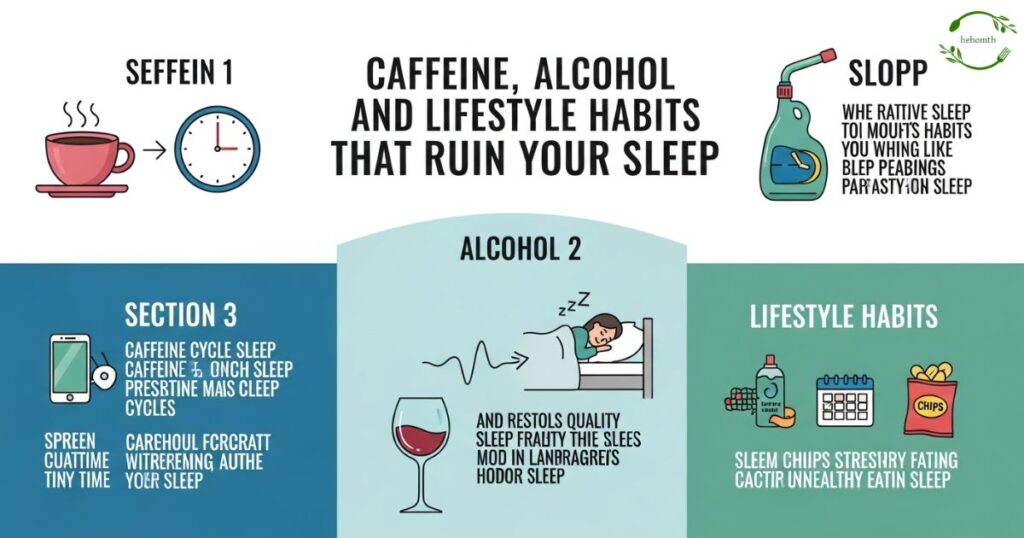
That afternoon coffee you rely on to push through the post-lunch slump? It might be the very reason you can’t sleep at night and why you wake up tired every day all over again. Caffeine intake has a half-life of roughly five hours in most adults, meaning half the caffeine from a 3 p.m. cup is still circulating in your bloodstream at 8 p.m. As you age, your body processes caffeine even more slowly. Health experts recommend capping caffeine intake at 200 to 300 mg caffeine per day roughly one to two standard cups and finishing your last cup before 10 a.m. if morning energy is your goal. Energy drinks, pre-workout supplements, and even certain teas contain hidden caffeine that adds up fast and silently disrupts your sleep cycle long after your head hits the pillow.
Alcohol consumption is equally deceptive. Many Americans use a nightcap to unwind, believing it promotes sleep. And technically it does alcohol helps you fall asleep faster. But it also suppresses REM sleep, the deepest and most restorative stage of your sleep cycle. Lack of sufficient REM sleep means your brain struggles to cement memories, keep your mood in check, and undergo the necessary repairs.
You may sleep eight hours and still feel like you got three. The fix isn’t complicated: limit alcohol consumption to one drink and finish it at least two to three hours before bed. These aren’t rigid rules they’re practical boundaries that protect your sleep quality and your mornings.
The Hidden Saboteurs Checklist Are You Guilty of Any?
Be honest with yourself. How many of these common habits are quietly destroying your sleep night after night?
1. Consuming coffee or energy drinks post-2 p.m. is a no-go.
2. Using a glass of wine or beer to relax before sleep.
3. Eating a large, heavy meal within two hours of sleeping
4. Sleeping in significantly later on weekends than weekdays
5. Working from your bed or using your bedroom as an office
6. Going days without any meaningful regular exercise
7. Relying on 24/7 schedules without any consistent wind-down routine
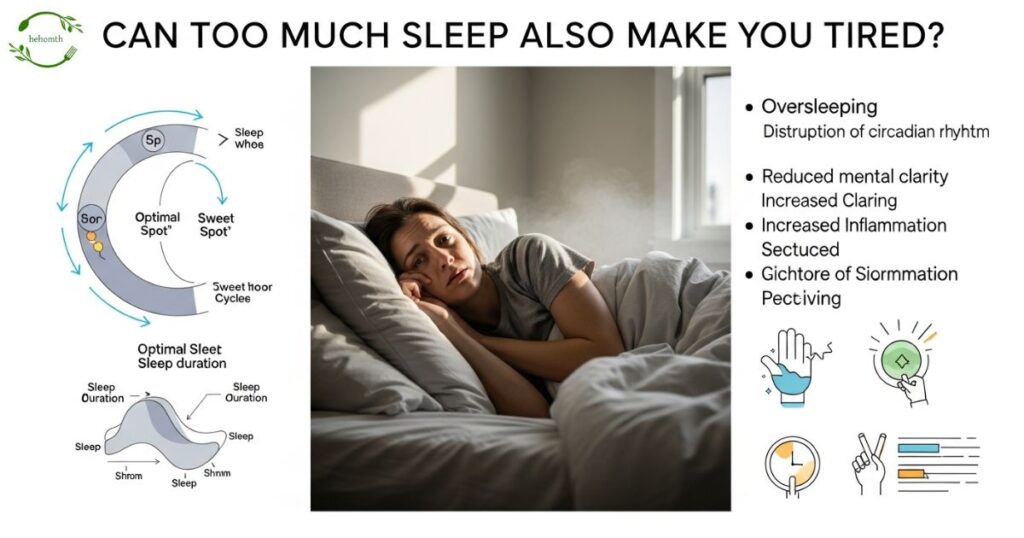
8. Can Too Much Sleep Also Make You Tired?
Social jet lag is a related issue that affects millions of Americans who maintain strict weekday schedules but sleep in dramatically on weekends. Shifting your wake time by two or three hours on Saturday and Sunday is the equivalent of flying across multiple time zones twice every week. Your circadian rhythm gets confused, your body clock resets in the wrong direction and Monday morning hits you like a freight train. The CDC recommends that adults aim for 7 to 9 hours of sleep consistently not occasionally. Consistency is the engine. Keeping your wake time the same every day, even on weekends, is one of the most powerful interventions for boost energy levels in the morning.

How to Find Your Perfect Sleep Sweet Spot
Finding your ideal sleep duration takes some honest experimentation. Try going to bed at the same time each night and waking at the same time each morning for two full weeks without an alarm if possible. Track how you feel each morning using a simple 1–10 energy scale. Most adults find their sweet spot sits between 7 and 8.5 hours. Sleep tracking devices, such as the Oura Ring, Whoop band, or even the Apple Watch, offer a closer look at your sleep patterns. They go beyond simply counting the hours, providing a breakdown of your sleep cycle stages. This allows you to see if you’re getting sufficient REM and deep sleep.
9. Simple Fixes to Stop Waking Up Tired (What Actually Works)
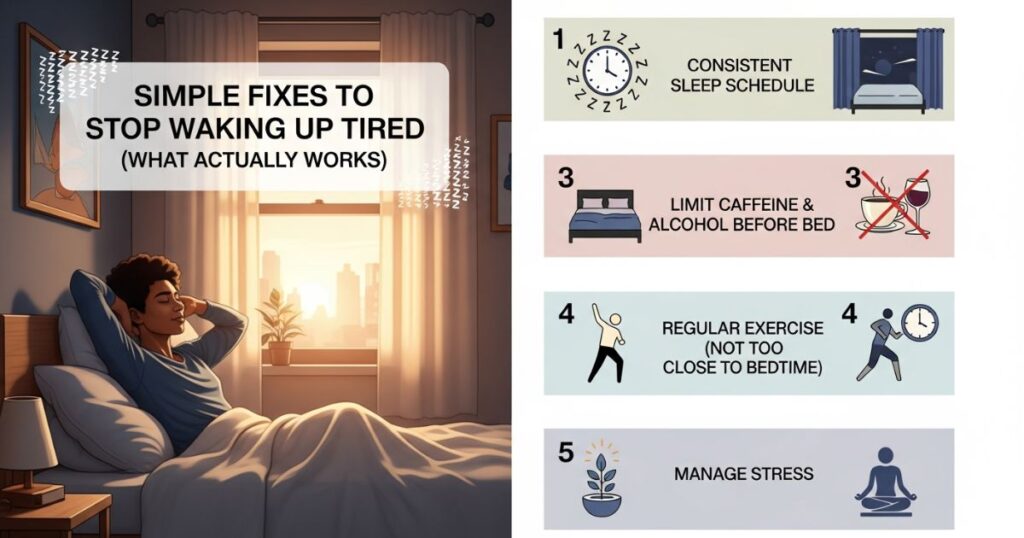
The best news in this entire article: most causes of fatigue in the morning are completely fixable. You don’t need a prescription or an overhaul of your entire life. Consistent, targeted lifestyle modifications produce real results. Start with your wake time pick one and protect it. Your circadian rhythm thrives on consistency. Getting natural sunlight within 30 minutes of waking up is one of the most evidence-backed ways to boost energy levels and reset your body clock. Neuroscientist Andrew Huberman of Stanford has extensively documented how morning light exposure suppresses residual melatonin and triggers cortisol at the right time giving you a natural energy surge that no coffee can fully replicate.
Regular exercise is another non-negotiable fix. Studies consistently show that people who exercise 150 minutes exercise per week even at a moderate walking pace report dramatically better sleep quality and morning energy. Pair that with a protein-rich breakfast, consistent hydration, and a screen-free wind-down routine and you’ve built a foundation that actually works. These aren’t trendy biohacks. They’re fundamental lifestyle modifications that your body has been waiting for. If you’re waking up tired every day, commit to this framework for just two weeks. The shift in your mornings will be noticeable.
Your 7-Day Wake Up Energized Action Plan
Don’t attempt to overhaul everything immediately. This straightforward plan, spread over a week, is designed to build momentum without causing you undue stress:
Day Focus Action
Day 1 Establish a consistent wake-up time and adhere to it, no matter how fatigued you feel.
Day 2 Disconnect from screens for a full hour before bedtime opt for a book instead.
Day 3 Consume 6 to 8 glasses of water throughout the day and observe any changes in your energy levels.
Day 4 Go for a 30-minute walk after lunch leave your phone behind and simply move.
Day 5 Be in bed by 10:30 p.m.
and track your morning energy on a scale of 1–10
Day 6 Eat a protein-rich breakfast eggs, Greek yogurt, or nut butter on whole grain
Day 7 Review your energy scores. Identify which day felt best and build from there
10. When Should You See a Doctor About Morning Fatigue?
Lifestyle modifications can fix a lot but not everything. If you’ve improved your sleep habits, cleaned up your diet, reduced stress, and you’re still waking up exhausted every single day, your body is asking for more than a nap and a new bedtime routine. Fatigue that persists for three or more weeks without a clear cause warrants a conversation with a professional. This is especially true if your exhaustion is affecting your work, your relationships, or your ability to function safely like staying awake while driving. A qualified internal medicine physician can order a comprehensive blood test panel that checks for thyroid function, iron levels, vitamin D, blood glucose, and inflammatory markers all in a single appointment. You can make an appointment or request appointment easily through platforms like Zocdoc and be seen within days.
Talk to your doctor without minimizing your symptoms. Many patients downplay their fatigue, saying things like I’m just stressed or it’s probably nothing. But chronic exhaustion is never nothing it’s data. Your doctor needs accurate information to help you. Be prepared to describe when the fatigue started, how many hours you’re sleeping, whether you snore, and any other symptoms you’ve noticed. A urine sample may also be requested if an undiagnosed infection like a urinary tract infection is suspected. Remember asking your doctor the right questions is how you get the right answers. You deserve to wake up feeling rested. Don’t wait months to find out why you aren’t.

Red Flag Symptoms That Need Immediate Medical Attention
Some symptoms go beyond typical morning grogginess. If you experience any of the following alongside your fatigue, talk to your doctor as soon as possible don’t wait for your next routine checkup:
1. Fatigue that has lasted more than three weeks with absolutely no improvement
2. Unexplained weight loss, coupled with ongoing fatigue, is a concerning symptom.
3. Chest pain, heart palpitations, or shortness of breath upon waking should not be ignored.
4. Severe brain fog that actively interferes with work or personal life is a significant issue.
5. Falling asleep uncontrollably and suddenly during the day could indicate narcolepsy.
6.
Extreme muscle weakness, dizziness, or fainting alongside morning fatigue
Conclusion
Waking up tired every day is not something you simply have to accept. It’s not a personality trait. It’s not inevitable aging. It’s a solvable problem and now you have a clear, comprehensive map of exactly where to start. From sleep disorders and hidden thyroid problem issues to dehydration, blue light exposure, caffeine intake, and alcohol consumption, the reasons behind your morning exhaustion are real, identifiable, and treatable. Whether the solution involves a simple change in the bedroom, a switch to a diet focused on whole foods, a commitment to regular exercise, or a long-overdue medical check-up, one thing is clear: inaction will only prolong the current situation.
Pick one section from this guide. Start there. Build one new habit this week. Then add another. Your mornings don’t have to feel like a battle. With the right information and a little consistency, waking up feeling genuinely rested refreshed, clear-headed, and full of energy is completely within reach. And if the exhaustion persists despite your best efforts? Talk to your doctor. That single conversation might be the most energizing thing you do all year.
Frequently Asked Questions
How do I stop waking up tired? Fix your sleep schedule, cut screen time before bed, and stay hydrated. If nothing helps, talk to your doctor to rule out an underlying condition.
Why do I wake up tired and no energy? Poor sleep quality, nutrient deficiency, or a hidden condition like sleep apnea or hypothyroidism could be draining your energy before your day even begins.
Why am I waking up tired after 8 hours? More hours don’t always mean better rest. Fragmented sleep, alcohol consumption, or an undiagnosed sleep disorder can silently destroy your sleep even during a full night.
What are the red flags for fatigue? Seek help if your exhaustion lasts over three weeks, comes with unexplained weight loss, chest pain, or severe brain fog that disrupts your daily life.
What is the 4:00 AM rule? The 4:00 AM rule suggests waking at 4 a.m. daily to maximize productivity. However, most sleep experts warn it severely disrupts your circadian rhythm and long-term sleep quality.
Meta Description:
Wake up tired every day? Discover the real causes, simple fixes, and when to see a doctor — start sleeping better tonight!

I help websites rank higher, grow traffic, and look amazing. My goal is to make SEO and web design simple and effective for everyone.
As a digital marketer, I specialize in SEO, content strategy, and online growth, helping businesses build a strong digital presence and reach the right audience.
Let’s achieve more together