
Anxiety doesn’t have to control your life anymore. Every day, 40 million American adults wake up with racing hearts, sweaty palms, and overwhelming worry. What is anxiety? It’s your body’s alarm system working overtime, triggering stress hormones even when there’s no real danger. The good news? You don’t need medication to find relief.
This comprehensive guide reveals 14 science-backed natural ways to treat anxiety without medication that actually work. From instant breathing exercises to powerful lifestyle shifts, you’ll discover proven anxiety management techniques used by therapists worldwide. Whether you’re battling severe anxiety or occasional panic, these remedies offer real hope. Let’s reclaim your peace of mind together, starting right now.
Understanding Anxiety What It Is and What Causes It
What causes anxiety? Your brain can’t tell the difference between a real tiger and tomorrow’s presentation. When you’re feeling anxious, your amygdala fires up stress hormones like cortisol and adrenaline. This ancient survival mechanism kept our ancestors alive. Today, it makes you sweat during Zoom calls.
The distinction between normal anxiety vs anxiety disorder matters tremendously. Normal anxiety fades when the stressor disappears. Severe anxiety sticks around like an unwelcome houseguest. It shows up through anxiety symptoms like trembling, sweating, palpitations, and shortness of breath. Understanding this mind-body connection helps you target the right solutions.
Environmental factors trigger anxiety daily. Work stress, relationship anxiety, social uncertainties, and even pandemic anxiety flood our systems. Internal causes dig deeper past relational traumas, fear of abandonment, and uncertainty about the future. Sometimes natural disasters or major life changes flip the anxiety switch. Your brain processes these threats identically whether they’re real or imagined.
Immediate Anxiety Relief 7 Techniques You Can Use Right Now
Panic doesn’t wait for appointments. These breathing exercises and relaxation techniques work within minutes. The 4-7-8 method calms your nervous system instantly. Breathe in for four counts, hold for seven, exhale for eight. This activates your parasympathetic response, telling your body the danger has passed.
Progressive muscle relaxation releases tension you didn’t know you carried. Start with your toes squeeze hard for five seconds, then release. Work upward through calves, thighs, stomach, and shoulders. This coping mechanism interrupts the anxiety cycle physically. The 5-4-3-2-1 grounding technique snaps you back to reality. Name five things you see, four you touch, three you hear, two you smell, one you taste. This mindfulness practice stops anxious thought spirals cold.
Cold water therapy might sound harsh, but it’s remarkably effective. Splash ice-cold water on your face or hold ice cubes. This triggers the dive reflex, instantly slowing your heart rate. Guided imagery transports your mind to peaceful places. Close your eyes and imagine every detail of a beach warm sand, salt air, gentle waves. Your brain responds as if you’re actually there, lowering stress hormones naturally.
Top 10 Natural Supplements for Anxiety Relief
How to manage anxiety without medication often starts with strategic supplementation. Magnesium regulates over 300 biochemical reactions in your body. This mineral calms the nervous system by supporting GABA neurotransmitters. Take 200-400mg of magnesium glycinate daily for best absorption. Studies show most Americans are deficient, making this a smart first choice.
L-theanine from green tea promotes alpha brain waves without drowsiness. This amino acid reduces anxiety while maintaining mental clarity. Ashwagandha, an ancient adaptogenic herb, lowers cortisol by 28% according to clinical trials. The KSM-66 extract works particularly well at 300-600mg daily. Omega-3 fatty acids build brain structure and fight inflammation. EPA specifically targets anxiety symptoms aim for 1000-2000mg combined EPA/DHA.
Passionflower boosts GABA naturally, rivaling benzodiazepines in some studies without the addiction risk. Rhodiola rosea fights fatigue-related anxiety, making it perfect for burnout. Chamomile contains apigenin, which binds to the same brain receptors as anti-anxiety medications. Valerian root works best for sleep-related anxiety. B-complex vitamins support neurotransmitter production deficiencies directly increase anxiety. Finally, CBD shows emerging promise for anxiety relief, though research continues evolving.
Supplement Comparison Table:
| Supplement | Daily Dosage | Best For | Time to Effect |
| Magnesium | 200-400mg | General anxiety | 2-4 weeks |
| L-theanine | 100-200mg | Focus + calm | 30-60 minutes |
| Ashwagandha | 300-600mg | Stress resilience | 4-6 weeks |
| Omega-3 | 1000-2000mg | Brain health | 6-8 weeks |
| Passionflower | 90mg extract | Acute anxiety | 1-2 hours |
Lifestyle Changes That Help Reduce Anxiety Naturally
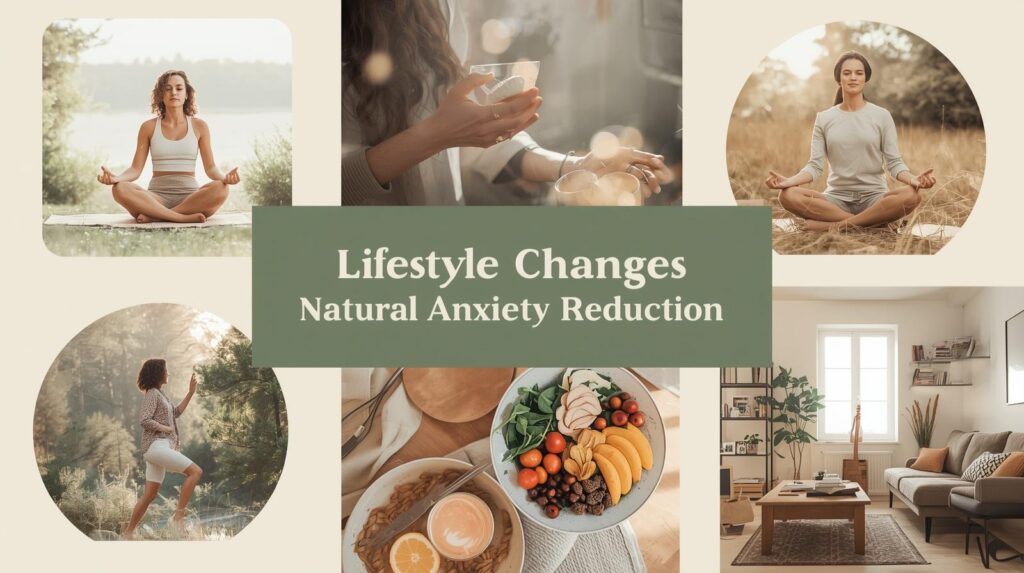
Physical activity transforms your brain chemistry more than any pill. Exercise releases endorphins, your body’s natural mood elevators. You don’t need CrossFit intensity even 10-minute walks relieve anxiety measurably. Aim for 150 minutes weekly of moderate movement. Yoga specifically targets the mind-body connection, reducing cortisol while building strength.
Sleep problems and anxiety create a vicious cycle. Sleep deprivation amplifies your amygdala’s reactivity by 60%. Your brain literally can’t regulate emotions without adequate rest. Create a sleep sanctuary cool, pitch-dark room, consistent schedule, screens off two hours before bed. This foundational change supports every other anxiety management technique you’ll try.
Eating healthy food stabilizes blood sugar and feeds your gut microbiome. The gut-brain axis directly influences mental health. Mediterranean diets reduce anxiety by 33% in research studies. Load up on leafy greens, fatty fish, fermented foods, and whole grains. Slash refined sugars and processed junk that spike and crash your system.
Caffeine consumption mimics anxiety physiologically. Coffee accelerates your heart rate and triggers the same physical symptoms as panic. If you’re anxious, gradually reduce intake rather than quitting cold turkey. Alcohol worsens anxiety through sleep disruption and GABA interference. That nightcap actually guarantees worse mental fatigue tomorrow.
Screen time and social media exposure fuel comparison culture and cortisol spikes. Blue light sabotages your circadian rhythm, compounding sleep problems. Implement phone-free zones during meals and the first hour after waking. Your quality of life skyrockets when you reduce screen use deliberately.
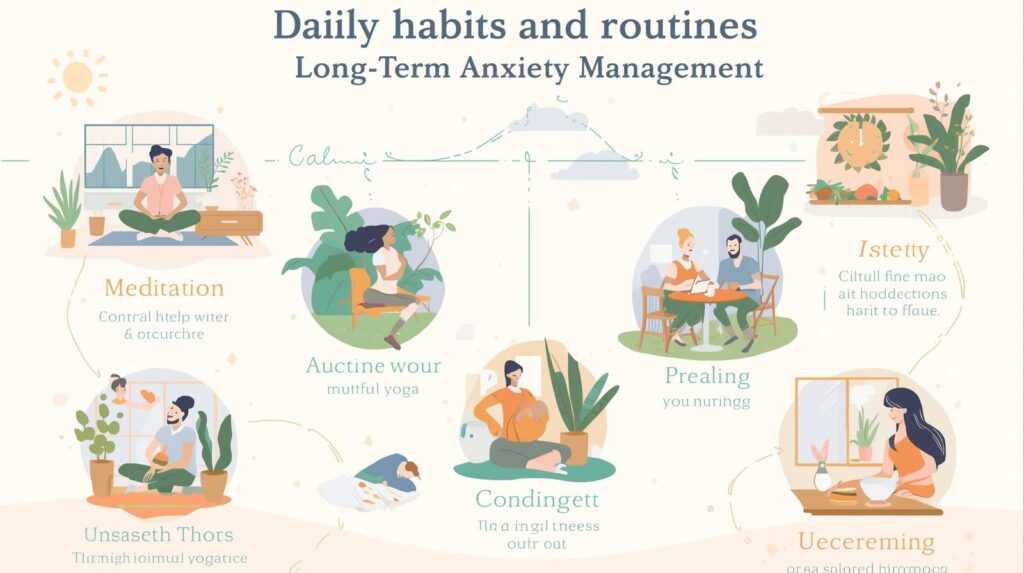
Daily Habits and Routines for Long-Term Anxiety Management
Morning rituals set your nervous system’s baseline. Sunlight within 30 minutes of waking regulates cortisol properly. Establish daily routines that create predictability your brain craves structure. Try journaling, meditation, or gentle stretching before checking your phone. This simple shift can prevent anxiety from controlling life before it starts.
Mindfulness practice rewires your brain measurably. Eight-week MBSR programs show lasting structural changes in brain scans. You don’t need hour-long sessions. Five minutes of focused breathing builds the neural pathways that control anxiety. Apps like Headspace or Insight Timer guide beginners perfectly.
Creative activities bypass verbal processing, releasing emotions stuck in your body. Art therapy, music therapy, and mandala painting activate different neural pathways than talk therapy. You don’t need talent just grab crayons or play music. The process matters, not the product. This emotional support tool works when words fail.
Share with trusted people regularly. Loneliness elevates cortisol chronically, while connection lowers it. Quality trumps quantity in relationships. One authentic friend who listens beats a hundred superficial contacts. Vulnerability strengthens bonds and lightens your anxiety burden.
Time in nature delivers measurable benefits. Forest bathing (Shinrin-yoku) lowers stress hormones significantly. Just 120 minutes weekly in green spaces optimizes mental health. Urban dwellers can visit parks or tend houseplants for similar effects.
When to Consider Professional Treatment Therapy and Medication Options
Sometimes self-care practices aren’t enough. Warning signs include panic attacks, avoiding normal activities, loss of motivation, or thoughts of self-harm. Severe anxiety that impairs work or relationships needs professional help. There’s zero shame in seeking specialist support it’s actually the bravest choice.
Psychotherapy offers evidence-based relief. Cognitive behavioral therapy (CBT) remains the gold standard, teaching you to challenge anxious thoughts. Acceptance and Commitment Therapy (ACT) and EMDR work beautifully for trauma-based anxiety. A skilled clinical psychologist provides tools that last a lifetime. Teletherapy through BetterHelp or Talkspace makes access easier than ever.
Medication vs therapy isn’t either/or. SSRIs, SNRIs, and buspirone help severe cases when combined with therapy. Medications don’t mean failure they’re tools in your toolkit. Work with a psychiatrist to find the right fit. Natural approaches complement prescription treatment beautifully. The goal is preventing anxiety from taking over your mind, using whatever works.
Creating Your Personal Anxiety Management Plan
Track your patterns first. Notice what triggers your anxiety symptoms, when they peak, and what helps. Journaling reveals connections you’ll miss otherwise. Distinguish between physical symptoms (racing heart, sweating) and cognitive ones (racing thoughts, worry). Different symptoms respond to different techniques.
Build your personalized toolkit. Keep breathing exercises for acute panic moments. Schedule daily meditation and physical activity for anxiety prevention. Stack techniques maybe morning yoga, lunchtime walks, evening journaling. Experiment ruthlessly to find what actually works for your unique brain.
Make concrete plans with realistic goals. Don’t try all 14 remedies simultaneously. Start with two or three, give them six weeks, then add more. Celebrate small wins sleeping better, handling one situation differently, feeling calmer for an hour. Progress isn’t linear, but it’s real.
Sense of security comes from preparedness. Create a physical anxiety kit: essential oils, stress ball, favorite tea, saved playlists. Keep digital resources bookmarked. When panic strikes, you’ll have tools ready instead of scrambling.
Frequently Asked Questions About Natural Anxiety Treatment
Is anxiety disorder treatable? Absolutely. While some people manage anxiety lifelong, many recover completely with proper treatment. Natural remedies combined with therapy offer powerful results. The earlier you address it, the better your prognosis.
How to deal with anxiety depends on severity. Mild anxiety management techniques work well independently. Moderate cases benefit from supplements plus lifestyle changes. Severe anxiety needs professional help alongside natural approaches. Psychotherapy accelerates progress significantly.
How to cope with anxiety in the moment? Use the 4-7-8 breathing method or 5-4-3-2-1 grounding technique. Cold water therapy stops panic fast. These immediate interventions work within minutes when practiced regularly.
Can natural remedies replace medication entirely? For mild to moderate anxiety, often yes. Severe anxiety usually requires integrated treatment. Never stop prescribed medication without medical consultation. Natural and pharmaceutical approaches work synergistically.
How long before seeing results? Breathing exercises work immediately. Supplements need 4-6 weeks minimum. Lifestyle changes show benefits gradually over months. Patience matter your brain needs time to rewire.
Which remedy works fastest? Cold water immersion and controlled breathing offer instant relief during panic. For ongoing anxiety relief, consistent exercise and sleep optimization create the strongest foundation.
Conclusion
You’ve discovered 14 powerful natural ways to treat anxiety without medication. From breathing exercises that calm anxiety instantly to lifestyle changes that rewire your brain long-term, you’ve got options. Managing stress naturally works when you commit to consistent practice.
Start small today. Pick one breathing technique and one lifestyle change. Maintain self-care even when you feel better especially then. Remember, professional help enhances natural approaches rather than replacing them. Your journey toward relieving anxiety begins with a single conscious breath.
How to manage anxiety without medication isn’t about perfection. It’s about building resilience through daily habits, emotional support, and proven coping mechanisms. You deserve peace. These tools will help you claim it.

I help websites rank higher, grow traffic, and look amazing. My goal is to make SEO and web design simple and effective for everyone.
As a digital marketer, I specialize in SEO, content strategy, and online growth, helping businesses build a strong digital presence and reach the right audience.
Let’s achieve more together