

You cut your portions, joined the gym, and swore off late night snacks. Yet the bathroom scale refuses to budge. You are not alone. Millions of Americans ask the same frustrating question: why am I not losing weight in a calorie deficit? The equation seems simple. Eat less. Move more. But your body is not a calculator. It is a complex living system influenced by total daily energy expenditure, basal metabolic rate, hormonal fluctuations, sleep deprivation, and even stress induced cortisol.
A perfect calorie deficit but not losing weight scenario happens when one or more of these hidden factors quietly sabotage your efforts. The good news? Every single one is fixable. Let us find your leak.
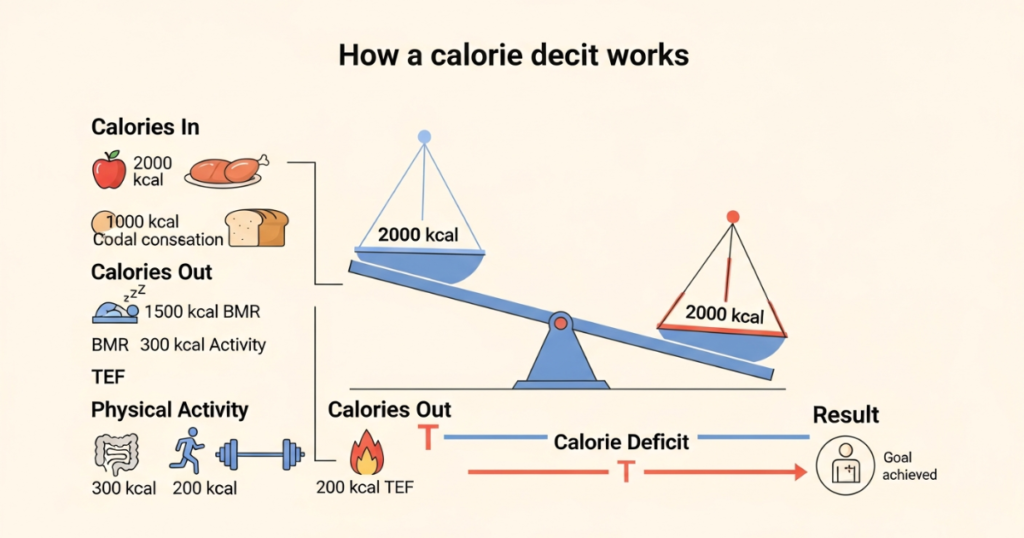
1. First, Understand: How Does a Calorie Deficit Actually Work?
Let us start with the foundation. A calorie deficit means you consume fewer calories than your body burns. But your total daily energy expenditure changes constantly. It includes everything from breathing to running errands to digesting food. Your basal metabolic rate makes up sixty to seventy five percent of that burn. That is the energy your body needs just to stay alive. Heart pumping. Lungs expanding. Brain thinking. When you create a negative energy balance, your body taps into stored fat for fuel. That is the goal.
However the relationship between energy input vs energy output is not fixed. Your body adapts. It fights to protect its fat stores like a dragon guarding treasure. A true calorie deficit but not losing weight scenario often means something disrupted this delicate balance. Maybe you miscalculated your resting metabolic rate. Maybe your body lowered its burn rate. Understanding this science removes the guilt. You are not failing. Your biology is just very good at staying alive. Now let us find the specific leak in your ship.
Table: How Calories Actually Leave Your Body
| Category | Percentage of Daily Burn | Examples |
| Basal Metabolic Rate (BMR) | 60–75% | Breathing, heartbeat, brain function, cell repair |
| Physical Activity | 15–30% | Walking, gym workouts, fidgeting, housework |
| Thermic Effect of Food | 10% | Digestion, absorption, nutrient storage |
H3: Why Most Americans Get This Wrong
We overestimate exercise burn by a shocking margin. One study found people overreport workout calories by three to four times. Meanwhile we underestimate food intake by thirty to fifty percent. That double error kills any calorie deficit. You think you are burning eight hundred calories at the gym but the treadmill lies. You think you ate fifteen hundred calories but the peanut butter jar tells a different story. Food tracking accuracy is the single biggest predictor of weight loss success. Without it you are flying blind.
2. You’re Not Accurately Counting Calories (Tracking Errors)
Here is the uncomfortable truth. Even nutritionists mess up portion distortion. A serving of cereal looks much smaller than you think. That handful of almonds? Probably two servings. The cooking oil glistening in your pan adds one hundred twenty calories you never logged. These small errors compound into hundreds of daily calories. Suddenly your calorie deficit but not losing weight makes perfect sense. You were never in a deficit to begin with. The good news? This is the easiest problem to fix.
Common calorie counting errors include forgetting beverages, ignoring cooking fats, and eyeballing portions instead of weighing. Your brain wants to believe that small slice of cheese is one ounce. It is probably two. The single Oreo you ate while making kids lunch? Count it. Those three bites of your partner’s pasta? Count them. Calorie counting errors destroy deficits quietly. A food scale costs twelve dollars on Amazon. It will save your weight loss journey. Use it for just one week. You will be stunned by what you learn.
Table: Real vs. Estimated Portions (USA Common Foods)
| Food | What People Think | Actual Calories | What One Serving Really Looks Like |
| Peanut butter | 1 tbsp (90 cal) | 190 cal (2 tbsp) | Two thumbs together |
| Olive oil | “a splash” (50 cal) | 240 cal (2 tbsp) | One shot glass |
| Cereal | 1 cup (120 cal) | 240 cal (2 cups) | A baseball |
| Chicken breast | 4 oz (180 cal) | 270 cal (6 oz) | Deck of cards |
The Starbucks Trap
That morning coffee habit might be destroying your calorie deficit. A Venti White Chocolate Mocha with whipped cream delivers five hundred thirty calories. That is nearly one third of many women’s daily needs. You drink it happily because coffee feels harmless. But empty calories from sugary drinks add zero nutrition. They spike your blood sugar then crash it hard. You feel hungrier two hours later. Swap to black coffee or cold brew with a splash of almond milk. You will save three thousand five hundred calories per week. That is a full pound of fat.
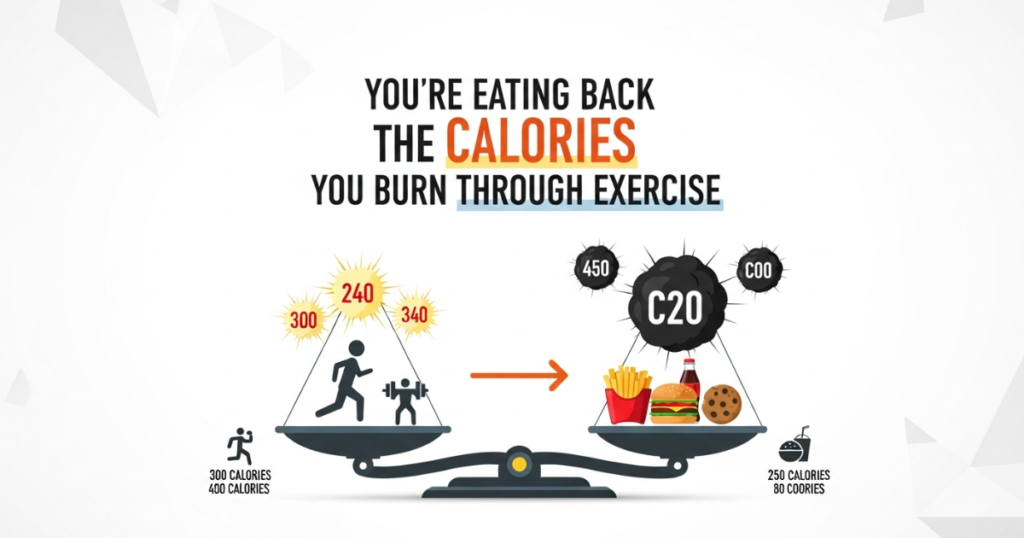
3. You’re Eating Back the Calories You Burn Through Exercise
You crushed a thirty minute HIIT session. Your Apple Watch says you burned four hundred calories. Time for a protein bar and a Gatorade, right? Wrong. Fitness tracker overestimation is a massive problem. Research shows wearables overreport calorie burn by twenty to ninety five percent. That four hundred calorie reading is probably closer to two hundred. When you eat back those “earned” calories you erase your entire calorie deficit. This is one of the most common reasons why am I eating less and not losing weight despite exercising regularly.
Stop eating back exercise calories unless you are an endurance athlete training for hours daily. Treat your workout as bonus fat loss. Not a permission slip to eat more. That smoothie bowl after spin class? It just erased your spin class. That protein bar marketed to athletes? Often two hundred fifty calories of glorified candy. Your body has plenty of stored energy. Let it use that fat instead of your post workout snack. Burning more calories than eating but not losing weight almost always traces back to this exact mistake.
The Chipotle Mistake
You order a chicken burrito bowl thinking you made a healthy choice. No sour cream. No cheese. But you add guacamole (an extra two hundred thirty calories) and double rice (another one hundred calories). The bowl totals eight hundred fifty calories. You burned maybe two hundred fifty during your workout. Net result? You are in a six hundred calorie surplus despite exercising. Your calorie deficit but not losing weight mystery is solved. Chipotle is delicious but deceptive. Build your bowl carefully. Skip the rice. Load fajita vegetables instead. Use salsa for flavor without the calorie bomb.
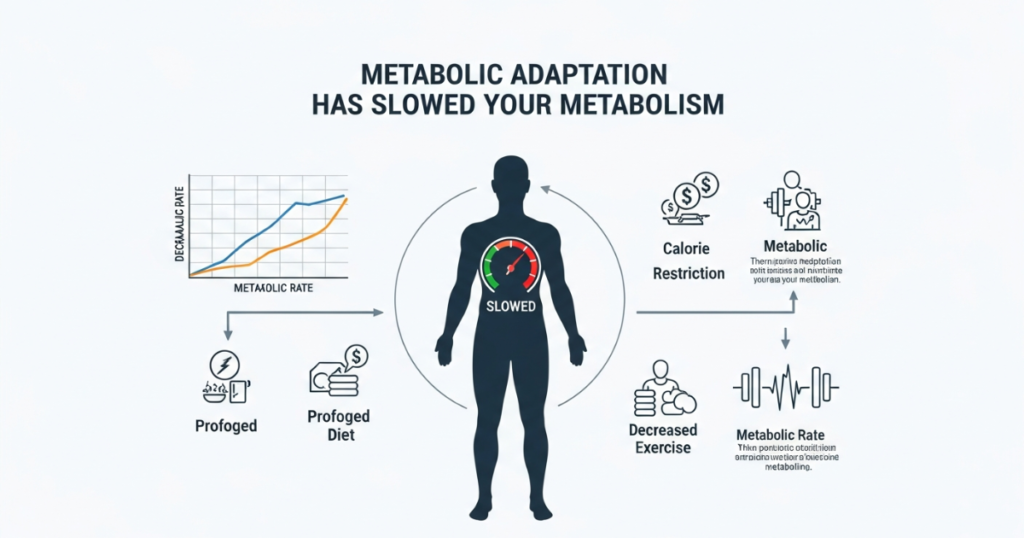
4. Metabolic Adaptation Has Slowed Your Metabolism
Your body is smarter than you think. When you consistently eat fewer calories it adapts. This phenomenon is called adaptive thermogenesis. Your resting metabolic rate drops. Your body becomes more efficient. You feel colder. You move less without realizing it. Suddenly your calorie deficit vs metabolic adaptation battle begins. The deficit that worked in January may fail by March. This is not your imagination. It is survival biology perfected over millions of years.
Metabolic slowdown happens faster with aggressive dieting. The famous Biggest Loser study proved this painfully. Contestants who lost massive weight quickly saw their metabolisms crash by five hundred to eight hundred calories per day. Years later their basal metabolic rate remained suppressed. That is why why am I gaining weight after cutting calories happens to so many people. Your body lowered its energy needs. Now your deficit is actually maintenance. The solution is not eating less. It is strategically increasing calories for a period to reset your hormones.
Case Study: The Metabolic Adaptation Reality
A thirty five year old woman cut from two thousand to fourteen hundred calories daily. She lost twelve pounds in eight weeks. Then the scale stopped. Her resting metabolic rate dropped from fourteen hundred to twelve hundred calories. Her non exercise movement decreased by two hundred fifty calories daily. Her fourteen hundred calorie diet was now only a two hundred calorie deficit. She needed a diet break. After two weeks at eighteen hundred calories her metabolism rebounded. She restarted at fifteen hundred calories and lost another ten pounds.
The Biggest Loser Effect
You do not need to be on reality TV to experience this. Any aggressive calorie deficit triggers metabolic adaptation. Your thyroid hormone drops. Your testosterone or estrogen decreases. Your nervous system slows down. You feel tired, hungry, and cold. That is your body screaming for help. Listen to it. Take a diet break. Eat at maintenance for one to two weeks. Your metabolism will recover. Then you can resume your **calorie deficit with renewed success. This is not giving up. This is smart strategy.
5. You’ve Hit a Weight Loss Plateau (Even in Deficit)
A weight loss plateau happens to nearly everyone. You lose weight beautifully for weeks or months. Then suddenly nothing changes for three or four weeks. The same calories. The same exercise. Zero results. Why? Because your smaller body burns fewer calories. You now weigh less so your total daily energy expenditure dropped. The slow weight loss phase has arrived. This is not failure. This is physics. Your calorie deficit shrunk without you realizing it. Time to recalibrate.
The rapid weight loss phase usually lasts four to six weeks. You lose water weight plus some fat. Then you enter the slow weight loss phase where real fat burning happens at half a pound to one pound weekly. Many people quit right here. They think something is broken. Nothing is broken. You just need to adjust. Drop your calories by one hundred to two hundred more. Or increase your daily steps by two thousand. Small tweaks break how to break a weight loss plateau wide open.
Table: Weight Loss Timeline Expectations
| Phase | Typical Duration | Weekly Loss | What Is Happening |
|——-|—————–|————-|——————–|
| Rapid loss | Weeks 1–4 | 2–4 lbs | Water weight drops, glycogen depletes |
| Slow loss | Weeks 5–12 | 0.5–1 lb | Real fat loss begins |
| Plateau | Variable | 0 lbs | Body adapts, need to adjust |
| Maintenance | Ongoing | 0 lbs | New set point established |
When to Worry About a Plateau
Less than three weeks? Be patient. Your weight loss has stalled temporarily due to water weight or hormonal fluctuations. More than six weeks? Time to change something. Recalculate your total daily energy expenditure using your new lower weight. You likely need fewer calories now. Also check your sleep and stress levels. Both dramatically impact weight loss plateau duration. If nothing works for eight weeks despite accurate tracking see your doctor. An underlying medical issue might be hiding.
6. You’re Restricting Your Diet Too Much (Too Low Calories)
Eating twelve hundred calories sounds disciplined. For many people it is starvation. Your body panics. It lowers thyroid function. It cranks up hunger hormones like ghrelin. It reduces spontaneous movement. You feel exhausted, irritable, and obsessed with food. Then you binge on Friday night. That pizza and ice cream obliterate your entire weekly calorie deficit. You blame yourself for lacking willpower. But the real problem is that twelve hundred calories was never sustainable.
The question is 1200 calories too little for weight loss depends on your size. A small sedentary woman might lose weight safely on twelve hundred. But most active women and nearly all men need more. Protein intake suffers on very low calories. You lose muscle mass preservation which lowers your metabolism further. Medical weight loss support providers rarely recommend below twelve hundred without supervision. Eat more to weigh more sounds backward. But calorie deficit but not losing weight often resolves when you actually increase calories. Your body stops panicking. Fat burning resumes.
Table: Minimum Recommended Calories by Activity Level
| Profile | Sedentary | Moderately Active | Active |
|———|———–|——————-|——–|
| Small woman (under 5’4”) | 1200–1300 | 1400–1600 | 1600–1800 |
| Average woman (5’4”–5’7”) | 1300–1400 | 1500–1700 | 1700–1900 |
| Average man (5’8”–6’0”) | 1500–1700 | 1800–2000 | 2000–2200 |
| Large or very active person | 1700–1900 | 2000–2200 | 2200–2500 |
The 1,200 Calorie Danger Zone
Unless you are a very small sedentary woman twelve hundred calories is too low. You will lose muscle mass preservation quickly. Your hair may thin. Your nails become brittle. Your period may stop. Your resting metabolic rate crashes. Then when you inevitably return to normal eating the weight comes back faster. This is the yo yo diet cycle. Avoid it entirely. Create a moderate calorie deficit of three hundred to five hundred calories below maintenance. Not one thousand. Slow sustainable wins every time.
7. You’re Only Focusing on Exercise, Not Diet Quality
You train hard five days weekly. CrossFit. Running. Spin classes. Yet the scale mocks you. Working out but gaining weight is incredibly frustrating. Here is why. Exercise burns surprisingly few calories. A thirty minute run burns about three hundred calories. That is two tablespoons of peanut butter. Meanwhile whole foods vs processed foods dramatically changes how your body uses energy. One thousand calories of cookies hits your bloodstream differently than one thousand calories of chicken and vegetables. Processed foods spike insulin and promote fat storage.
The debate between cardio vs strength training for fat loss misses the bigger point. Neither matters if your diet quality is poor. Nutrient density keeps you full. Dietary fibre feeds good gut bacteria. Protein intake preserves muscle. A calorie deficit of Twinkies leaves you hungry, tired, and nutrient deficient. A calorie deficit of lean protein, vegetables, and healthy fats leaves you satisfied and energized. Stop obsessing over calories alone. The quantity vs quality of food argument is settled. Quality wins.
Quote from Research: A calorie is not just a calorie when it comes to metabolic health. The food matrix, fiber content, and nutrient density fundamentally alter how the body processes energy. Dr. David Ludwig, Harvard Nutritionist
The Protein Fix
Eat thirty grams of protein per meal. Every single meal. That means four eggs and Greek yogurt for breakfast. Chicken breast or salmon for lunch. Beef, tofu, or lentils for dinner. Protein intake boosts your metabolism by twenty to thirty percent through digestion alone. It kills comfort food cravings. It preserves muscle during fat loss vs weight loss. People who eat high protein diets naturally eat three hundred to four hundred fewer calories daily without trying. This is the closest thing to a weight loss hack that actually works.

8. High Stress Levels Are Raising Cortisol
Your life is stressful. Deadlines. Traffic. Bills. Family obligations. Your body lives in fight or flight mode. Chronic stress pumps out cortisol levels that never fully drop. High cortisol tells your body to hold belly fat specifically. It increases appetite regulation problems by making you crave sugar and refined carbs. It reduces sleep quality. It kills motivation to exercise. You can maintain a perfect calorie deficit but not losing weight because stress induced cortisol is overriding everything.
Emotional eating is not a character flaw. It is biology. Cortisol makes high sugar high fat foods irresistible. Your brain thinks you are in danger and needs quick energy. The solution is not more willpower. The solution is lowering cortisol at its source. Five minutes of deep breathing lowers cortisol significantly. A ten minute walk outside does the same. Prioritizing sleep is nonnegotiable. Reduce stress to lose belly fat is not wellness fluff. It is hard science.
Table: Cortisol Effects on Weight Loss
| Cortisol Level | Hunger Hormones | Fat Storage Location | Craving Type | Weight Loss Impact |
|—————-|—————-|———————-|————–|——————–|
| Normal | Balanced | Even distribution | Minimal | Full deficit works |
| Moderately high | Increased ghrelin | More belly fat | Sugary carbs | 30% slower loss |
| Chronically high | Leptin resistance | Primarily visceral belly fat | Processed foods | 50–70% slower loss |
5 Minutes to Lower Stress
Try this right now. Breathe in for four seconds. Hold for four seconds. Breathe out for six seconds. Repeat ten times. Your heart rate slows. Cortisol drops. You feel calmer. Do this five times daily. Before meals. Before bed. When traffic enrages you. Your calorie deficit will finally work when your nervous system calms down. Stress management is not optional for weight loss. It is essential.
9. Poor Sleep or Lack of Sleep Is Sabotaging You
Sleep deprivation is a metabolic disaster. One bad night reduces insulin sensitivity by twenty five percent. Your body cannot process carbs efficiently. Ghrelin and leptin your main hunger hormones go haywire. Ghrelin the feed me signal increases by fifteen percent. Leptin the I am full signal decreases by fifteen percent. You wake up ravenous. You crave donuts and bagels. Your calorie deficit never stood a chance against biology this powerful.
Late night snacking adds two hundred to four hundred extra calories daily for most short sleepers. You feel tired so you reach for energy dense foods. You skip morning workouts because you are exhausted. The cycle continues. Improve sleep for weight loss by setting a consistent bedtime. No phones in bed. No caffeine after 2 PM. Dark cool room. Seven to nine hours minimum. People who fix their sleep lose significantly more weight on the exact same calorie deficit. Sleep is not rest. Sleep is active fat burning.
Case Study: The Sleep Experiment
Researchers took two groups of overweight adults. Both ate identical fourteen hundred calorie diets. One group slept five and a half hours nightly. The other slept eight and a half hours. After two weeks the short sleep group lost sixty percent less fat. They also lost significantly more muscle mass. They reported twice the hunger levels. Sleep duration alone changed everything. The calorie deficit was identical. The results were not
The Netflix Trap
One more episode feels harmless. But chronic short sleep destroys your calorie deficit. You tell yourself you will sleep more tomorrow. Tomorrow never comes. Set a phone alarm for thirty minutes before your bedtime. When it goes off finish your current task. Brush your teeth. Get in bed. Read a book. No screens. Your future leaner self will thank you. Sleep is the most underrated weight loss tool in existence.
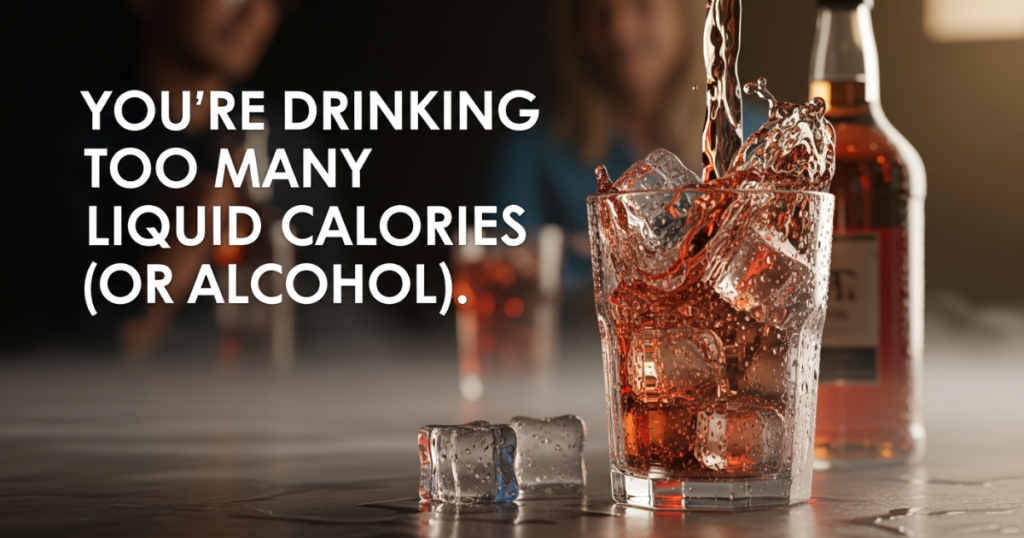
10. You’re Drinking Too Many Liquid Calories (or Alcohol)
Empty calories from drinks sneak past your brain’s fullness sensors. You can drink five hundred calories of soda and feel zero satisfaction. You would never eat five hundred calories of broccoli without feeling stuffed. Liquid calorie from sweet tea, juice, sports drinks, and fancy coffee concoctions add up terrifyingly fast. A single thirty two ounce fountain Coke has three hundred eighty calories. Drink that daily and you add nearly four pounds of fat yearly. Your calorie deficit disappears one sip at a time.
Alcohol is even worse for weight loss. Your liver prioritizes metabolizing booze over burning fat. Alcohol stops fat oxidation completely for twelve to twenty four hours after drinking. Three beers add four hundred fifty calories plus zero nutrition. A weekend of drinking can erase an entire week of calorie deficit work. Reduce alcohol for weight loss to special occasions only. Not daily wind downs. Not every weekend. Your waistline will thank you.
Table: Hidden Liquid Calories in Popular USA Drinks
| Drink | Size | Calories | Sugar (tsp) | Time to Burn Off (Walking) |
|——-|——|———-|————-|—————————-|
| Starbucks Frappuccino | Venti | 510 | 16 tsp | 90 minutes |
| Margarita | 10 oz | 550 | 8 tsp | 100 minutes |
| Craft IPA beer | 16 oz | 280 | 0 tsp (alcohol calories) | 50 minutes |
| Sweet tea (McDonald’s) | 32 oz | 300 | 18 tsp | 55 minutes |
| Coca Cola | 20 oz | 240 | 15 tsp | 45 minutes |
| Red Bull | 16 oz | 220 | 11 tsp | 40 minutes |
The Friday Night Effect
Three craft beers Friday night. Two glasses of wine Saturday dinner. A mimosa Sunday brunch. That is twelve hundred alcohol calories across the weekend. Plus the greasy food you crave while drinking. Plus the hangover that kills Sunday workouts. Your Monday through Thursday calorie deficit gets completely destroyed by Friday through Sunday. Drink more water for fat loss instead. Sparkling water with lemon or lime gives you the fizzy satisfaction without the metabolic damage.
11. You’re Retaining Water (Not Fat)
The scale jumps three pounds overnight. You panic. You feel like a failure. But that is water retention. Not fat. You cannot gain three pounds of fat in twenty four hours. That requires eating ten thousand five hundred extra calories. You did not do that. Salt induced bloating is the real culprit. A salty restaurant meal adds two to four pounds of water weight temporarily. Carbohydrate intake also affects water. Every gram of carbs stored pulls three to four grams of water with it.
Hormonal fluctuations cause massive water shifts. Many women gain five to ten pounds of water before their period. That is normal. Menstrual cycle weight changes are real but temporary. Hydration status also matters. When you are dehydrated your body holds water desperately. Counterintuitively drinking more water helps flush excess water. Your calorie deficit but not losing weight panic is almost always water weight. Give it three to five days. Weigh again. The “gain” will disappear.
Quote: Daily weight fluctuations of two to five pounds are completely normal and have nothing to do with fat gain. Weight loss happens over weeks. Water weight happens over hours. Dr. Spencer Nadolsky, Obesity Medicine Physician
The Carb Bloat
You ate pasta for dinner. You had sushi with white rice. You enjoyed a sandwich on a crusty baguette. Now the scale is up two pounds. Relax. That is glycogen storage. Your muscles hold water with carbs. Your calorie deficit is fine. Your scale is lying to you. Go back to your normal low carb or moderate carb eating. The water will leave within three days. This is why weighing scale consistency matters so much. Same time. Same conditions. Same day weekly. Not daily panic attacks.
12. Medical or Hormonal Conditions Are in the Way
Sometimes your calorie deficit fails because something is medically wrong. Hypothyroidism and calorie deficit do not mix well. An underactive thyroid lowers your basal metabolic rate by two hundred to four hundred calories daily. PCOS and weight loss struggles affect ten percent of women. Insulin resistance makes weight loss incredibly difficult even with perfect diet. Menopause weight gain causes include dropping estrogen which shifts fat storage to the belly. These are real biological barriers.
Medications that cause weight retention include many antidepressants (especially SSRIs), beta blockers, antipsychotics, diabetes medications, and steroids. Birth control pills and hormone replacement therapy can also cause water retention. If you take any of these and experience calorie deficit but not losing weight talk to your prescribing doctor. Do not stop medications on your own. But ask about alternatives. Sometimes a simple switch changes everything.
Table: Medical Conditions That Sabotage Calorie Deficits
| Condition | How It Affects Weight | Prevalence in USA | Recommended Action |
|———–|———————-|——————-|———————|
| Hypothyroidism | Lowers BMR 200–400 calories | 5% of adults | Thyroid medication, retest every 6 months |
| PCOS | Increases insulin resistance | 10% of women | Metformin, lower carb intake |
| Cushing’s syndrome | High cortisol causes rapid gain | Rare | Endocrine specialist |
| Insulin resistance | Calories stored as fat easily | 40% of adults | Reduce sugar, increase movement |
| Menopause | Slower metabolism, belly fat shift | 100% of women post 50 | Strength training, protein focus |
When to See a Doctor for Weight Loss
Six months of honest calorie deficit with zero results? See an endocrinologist. Request a full thyroid panel (not just TSH). Request fasting glucose and insulin. Request hormone testing including estrogen, testosterone, and cortisol. Medical reasons for not losing weight are real. They are not excuses. They are treatable conditions. Do not suffer in silence. Do not blame yourself. Medical weight loss support exists for exactly this situation.
13. You’re Gaining Muscle While Losing Fat (Body Recomposition)
Here is the best problem on this list. Body recomposition means you are losing fat and gaining muscle simultaneously. Your muscle gain while losing fat makes the scale seem stuck. But your body is transforming. Muscle is denser than fat. Five pounds of muscle takes up less space than five pounds of fat. So you look leaner and smaller while weighing the same. Your jeans fit better. Your arms look more defined. But the scale disappoints you.
The question is it possible to gain muscle while in a calorie deficit is yes for beginners and people returning to training after a break. Your body uses stored fat for energy while building muscle from protein intake. This is the holy grail of body transformation. Weight loss vs fat loss matters here. You want fat loss. Not just weight loss. Scale not moving but clothes fit better is a classic sign of body recomposition. Celebrate this. You are winning.
Case Study: Body Recomposition Success
A forty two year old man started strength training three times weekly. He ate a modest calorie deficit of three hundred calories. He prioritized one hundred fifty grams of protein daily. After twelve weeks his scale dropped only four pounds. But his body fat percentage dropped from twenty eight percent to twenty two percent. He lost six percent body fat. He gained three pounds of muscle. His pants size dropped from thirty six to thirty two. The scale told a misleading story. His progress photos told the truth.
Why the Scale Lies
Take progress photos instead of weighing every week. Same lighting. Same clothes. Same poses. Compare month to month. Also take body measurements progress of your waist, hips, chest, arms, and thighs. These numbers reveal fat loss even when weight stays the same. Strength training three times weekly plus adequate protein intake creates body recomposition. Do not fear the stable scale. Fear losing muscle while dropping weight. That leads to the skinny fat look nobody wants.
14. You Weigh Yourself Inconsistently or Too Often
Daily weight fluctuations of two to five pounds are completely normal. Food mass. Water retention. Bowel movements. Sodium intake. Carbohydrate intake. Menstrual cycle. All cause daily swings. Weighing yourself every day creates emotional chaos. You feel victorious at one hundred fifty two pounds Monday then defeated at one hundred fifty five pounds Tuesday. Nothing changed in twenty four hours except water. Yet your motivation crashes.
Weighing scale consistency means picking one day per week. Same scale. Same time (morning after peeing before eating or drinking). Same conditions (no heavy meal the night before). Tuesday mornings work well because weekend indulgences have cleared. Write the number down. Then ignore the scale for another seven days. How long does it take to see results in a caloric deficit? Two to four weeks to see meaningful trends. Not two to four days.
Quote: The scale is a poor tool for measuring daily progress but an excellent tool for measuring monthly trends. Weigh weekly. Track monthly averages. Ignore the daily noise. Layne Norton, PhD in Nutritional Sciences
The Tuesday Morning Weigh In
Pick Tuesday. Wake up. Use the bathroom. Strip down to underwear. Step on the scale. Record the number. Walk away. Do not weigh again until next Tuesday. This simple protocol saves you from the emotional rollercoaster. Your calorie deficit works in the background. You do not need daily updates. Trust the process. Trust the math. The scale will eventually cooperate when you stop obsessing over it.
15. You’re Not Giving It Enough Time (Unrealistic Expectations)
The fitness industry sold you a lie. Six pack abs in six weeks. Lose twenty pounds before your reunion. These timelines are fantasy for most people. Real sustainable weight loss habits produce zero point five to one pound weekly fat loss. That is four to eight pounds monthly at best. The first month includes water weight so you might see more initially. Then it slows. That is normal. That is healthy.
Rapid weight loss vs sustainable weight loss is an important distinction. Quick drops come from severe restriction and excessive cardio. They almost always rebound. Sustainable weight loss habits come from moderate calorie deficit, strength training, adequate protein, good sleep, and stress management. This approach takes longer but the weight stays off. Ask yourself a hard question. Do you want to lose weight fast and regain it faster? Or do you want to lose weight once and keep it off forever?
Table: Realistic Weight Loss Timeline (For a 200 lb Person)
| Time Period | Realistic Loss | What Is Happening |
|————-|—————-|——————–|
| Month 1 | 6–10 lbs | Water weight drops significantly |
| Month 2 | 4–6 lbs | Real fat loss begins |
| Month 3 | 4–5 lbs | Slow steady fat loss |
| Month 4 | 3–5 lbs | Possible mini plateau |
| Month 5 | 3–4 lbs | Need to adjust deficit |
| Month 6 | 2–4 lbs | Smaller body needs fewer calories |
The 4-Week Rule
Give every new calorie deficit at least four weeks before judging it. The first week is water weight chaos. The second week your body adapts. The third week real fat loss starts. The fourth week you see a trend. Most people quit during week two or three right when fat loss begins. Do not be most people. Trust the process. Be boringly consistent. The results will come.
How to Break Through the Deficit & Start Losing Weight Again
You now know fifteen reasons for calorie deficit but not losing weight. Time to act. First recalculate your calorie deficit using your current weight not the weight you started at. Your total daily energy expenditure drops as you shrink. Second start strength training for weight loss three times weekly. Muscle is metabolic currency. Third track food accurately with a scale for one week minimum. No guessing. No estimating. Fourth improve sleep for weight loss to seven plus hours nightly.
Fifth reduce stress to lose belly fat through daily breathing or walking. Sixth eat more protein in a deficit aiming for thirty grams per meal. Seventh drink more water for fat loss aiming for half your body weight in ounces. Eighth reduce alcohol for weight loss to special occasions only. Ninth take progress photos instead of weighing every two weeks. Tenth when to see a doctor for weight loss if nothing works after six months of honest effort.
The Two Week Reset Plan
Week one: Eat at maintenance calories. No deficit. Just maintenance. Lift weights three times. Walk eight thousand steps daily. Sleep eight hours. No alcohol. Week two: Reduce calories by three hundred below your recalculated maintenance. Continue strength training and walking. Your metabolism will respond. The plateau will break. This works for nearly everyone.
The Two-Week Reset
Try this today. Stop your calorie deficit for fourteen days. Eat enough to maintain your current weight. Your hormones need a vacation. Your metabolism needs reassurance that famine is over. After two weeks restart your deficit at a smaller more sustainable level. Three hundred to four hundred calories below maintenance. Not seven hundred. Not one thousand. Your body will cooperate this time. Plateaus break when you stop fighting biology and start working with it.
Frequently Asked Questions (FAQs)
Can you gain fat in a calorie deficit? No. That violates the laws of thermodynamics. But water retention, food mass, and constipation can mask fat loss on the scale. A true calorie deficit always burns fat. Trust the math.
Why do I feel bloated in a calorie deficit? Rapid increases in dietary fibre from vegetables cause temporary bloating. Your gut bacteria need time to adjust. Also salt induced bloating from processed diet foods is common. Drink water. Give it two weeks. The bloat subsides.
Why am I not losing weight eating 1500 calories a day? Either your maintenance calories are below fifteen hundred (unlikely unless you are very small and sedentary) or you are miscounting. Use a food scale for one week. The answer will appear.
How often should I adjust my calorie intake when losing weight? Every ten to fifteen pounds lost. Recalculate your total daily energy expenditure at each milestone. Your smaller body needs fewer calories. Adjust accordingly.
Should I exercise more if I’m not losing weight? Not necessarily. Cardio vs strength training for fat loss favors strength training for most people. Add two to three strength sessions weekly before adding more cardio. Overtraining raises cortisol and increases hunger.
How to lose weight when nothing works? See a doctor. Check thyroid, blood sugar, and hormones. Work with a registered dietitian. Consider medical weight loss support including GLP-1 medications if appropriate. Sometimes you need professional help. That is not failure. That is wisdom.
The Bottom Line
Why am I not losing weight in a calorie deficit has many answers. Tracking errors lead the list. Then metabolic adaptation. Then stress and sleep. Then medical conditions. Most people fail because they quit right before success would have arrived. Your body fights change. That is normal. That is not a sign to stop.
Calorie deficit but not losing weight is solvable. Pick one or two reasons from this guide. Fix them for two weeks. Reassess. Then fix another. Small changes compound into massive results. You did not gain weight overnight. You will not lose it overnight. But you can lose it. Thousands of people have solved this exact problem. You will too. Start today. One small change. One better choice. Your future self will thank you.
Related Resources You May Find Helpful
National Institute of Diabetes and Digestive and Kidney Diseases offers free evidence based weight loss guides. Search NIDDK weight loss. Centers for Disease Control provides healthy weight calculators and physical activity recommendations. Academy of Nutrition and Dietetics helps you find a registered dietitian in your area. Precision Nutrition has excellent calorie calculators and macro guides. American Thyroid Association explains thyroid testing and treatment.
Recommended books:The Metabolism Reset Diet by Dr. Alan Christianson. Why We Eat Too Much by Dr. Andrew Jenkinson. The Obesity Code by Dr. Jason Fung. These provide deeper science behind calorie deficit vs metabolic adaptation.
Apps to try: MyFitnessPal or Cronometer for tracking. Happy Scale or Libra for smoothing scale weight trends. MacroFactor for adaptive TDEE calculation. These tools remove guesswork from your calorie deficit.
When to seek professional help: If you have tried everything on this list for six months with zero results ask your primary care doctor for a referral to an endocrinologist or obesity medicine specialist. Medical reasons for not losing weight are real and treatable. You deserve support. You deserve answers. Go get them.

I help websites rank higher, grow traffic, and look amazing. My goal is to make SEO and web design simple and effective for everyone.
As a digital marketer, I specialize in SEO, content strategy, and online growth, helping businesses build a strong digital presence and reach the right audience.
Let’s achieve more together